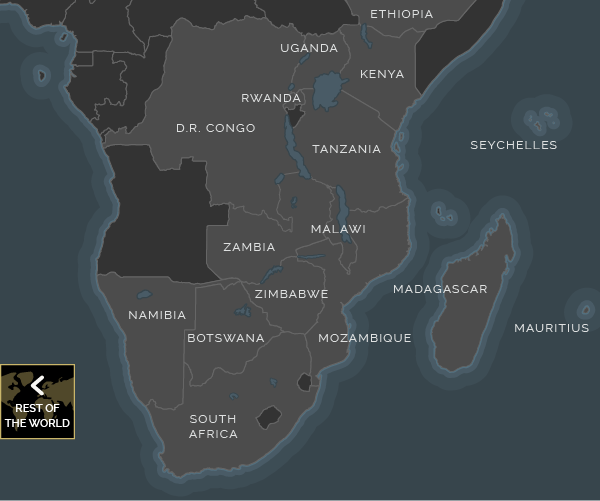
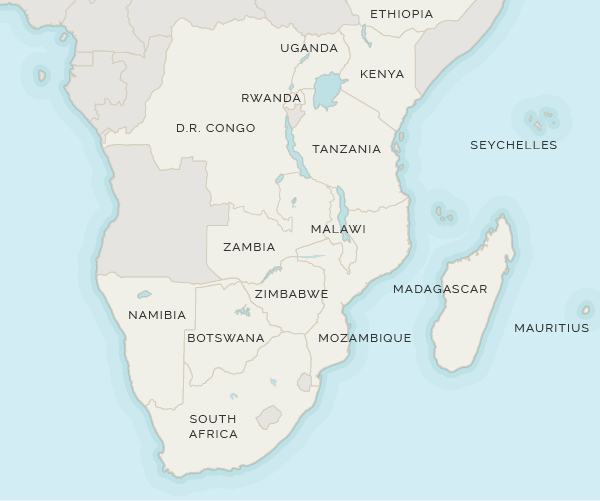
These islands lie some 800km east of Madagascar in the Tropic of Capricorn and boast some of the most remarkable flora, fauna and wildlife - some indigenous to the area.
The islands of Mauritius, La Réunion and Rodrigues form the Mascarene archipelago, the remains of an ancient land mass which once united Asia and Africa. This volcanic, mountainous archipelago remained undiscovered until the end of the 14th century, when it's thought Arab seamen, blown off their trading route, stumbled across the islands.
However, it wasn’t until the Dutch established a settlement here in the 17th century that the islands finally became inhabited. These many centuries of isolation resulted in a remarkable flora and fauna unique to the Mascarenes and, although many species, including the Dodo, have since become extinct, some indigenous birds and reptiles can still be found here, while the surrounding waters are home to the Blue, Black and Striped Marlin, the most powerful fish in the Indian Ocean.
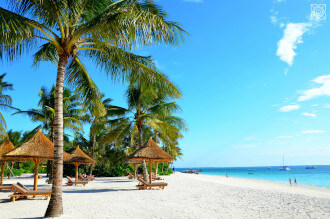
MauritiusMark Twain was once moved to exclaim that God modelled heaven on Mauritius. Uninhabited until the 17th century, it is today a thriving island of diverse cultures - African, Indian, Chinese and European - a unique racial harmony. The island's ever changing scenery belies its small area. Lofty forested mountain peaks overlook undulating fields of sugar cane, all encompassed by fantastic coastal scenery of powdery white sand beaches and spectacular blue lagoons, rich in marine life. In Port Louis the Pamplemousse Royal Botanical Gardens are noted for 60 different types of palms, including the enormous Talipot Palm, which flowers only once in 100 years and then dies.
Examples of our Optional Excursions
Northern Impressions (half day) - £31 approx
Included on this tour are the famous Pamplemousse Royal Botanical Gardens with its huge range of flora, the famous model boat factory of ‘Historic Marine’ to see traditional boat building at first hand, and Cap Malheureux with it's magnificent views over northern Mauritius.
Ile aux Cerfs (full day) - £42 approx
This idyllic island, with its beautiful white sand beaches, is the perfect place to relax, take a cooling swim and enjoy typical Mauritian hospitality and a creole lunch.
Southern Island (full day) - £50 approx.
After visiting the capital, Port Louis and the restored colonial villa of Eureka, you visit the breathtaking waterfall of ‘Riviere du Cap’, which falls 90 metres. After a creole lunch at Domain de St. Denis, you drive to the lake at Grand Bassin and then on to Trou aux Cerfs, an extinct volcanic crater, with its magnificent views.
Largest of the Mascarenes, La Réunion is an island of dense vegetation with many ancient forest species and environments surviving to the present day. Although it has a number of superb beaches, it is the island’s exotic interior that most fascinates the visitor. Dramatic mountains, wide craters, deep gorges and a still active volcano together create an awe-inspiring vista.
Example of our Optional Excursions
Piton de la Fournaise (full day) - £53 approx
A drive south takes us to Nez de Boeud with its spectacular views, before we make our way to the volcanic crater of Pas de Bellecombe and after a further drive, at 2077m you look down into the active Piton de la Fournaise volcano. After a typical creole lunch we make our way back to St Denis for a short shopping trip, time permitting.
Cirque de Salazie (full day) - £50 approx
Get a flavour of old colonial days with this trip that includes a visit to St Denis, the capital, followed by an exploration of La Réunion’s lush interior as we make our way to Salazie. Lunch is taken at Hellbourg and on our return we will stop at a vanilla farm, before making our way back to St Denis.
The West Coast (half day) - £31 approx
You drive towards St Paul, the former capital and second largest settlement on the island and a stop is then made for refreshments at St Gilles les Bains, the premier beach resort on the island. After a visit to the islands Aquarium a short stop is made at Roches Noires, another popular beach area, before returning to St Paul where you visit the Sailor Cemetery. The poet Leconte de Lisle and the pirate Olivier ‘La Buse’ Levasseur (The Buzzard) a buried here.
Piton Maido (half day) - £31 approx
A chance to enjoy some of the best views of La Réunion as we make our way to the Cirque de Mafate at 2,204m. We return by the same route via the village of La Petite France, where we will visit a geranium oil distillery.
Mauritius lies within the south tropical belt and humidity is generally high. There is a warm coastal climate (particularly between January and April) but climates and temperatures vary on different parts of the island with temperatures being slightly lower with more rain on the inland plateau. The rainy season normally occurs between January and March. Daylight hours range from 0500 hrs to 1900 hrs in the summer and from 0600 hrs to 1730 hrs in the winter months of June, July and August.
| Jan | Feb | Mar | Apr | May | Jun | Jul | Aug | Sep | Oct | Nov | Dec | |
|---|---|---|---|---|---|---|---|---|---|---|---|---|
| Source: www.climate-zone.com and www.weather.com |
Temperatures are in Degrees Centigrade | |||||||||||
| Average Temperature | 27 | 27 | 27 | 27 | 27 | 26 | 25 | 25 | 25 | 26 | 26 | 27 |
| Average Max Temperature | 31 | 31 | 31 | 31 | 30 | 28 | 28 | 28 | 28 | 29 | 30 | 31 |
| Average Min Temperature | 23 | 23 | 23 | 23 | 23 | 23 | 22 | 22 | 22 | 22 | 23 | 23 |
| Average Rainfall (mm) | 252 | 246 | 216 | 221 | 147 | 102 | 114 | 89 | 61 | 66 | 89 | 191 |
The above average daily temperature and average monthly rainfall figures are given as a guide only and no responsibility can be taken for any errors or omissions.